Whales
Species most likely to be encountered.
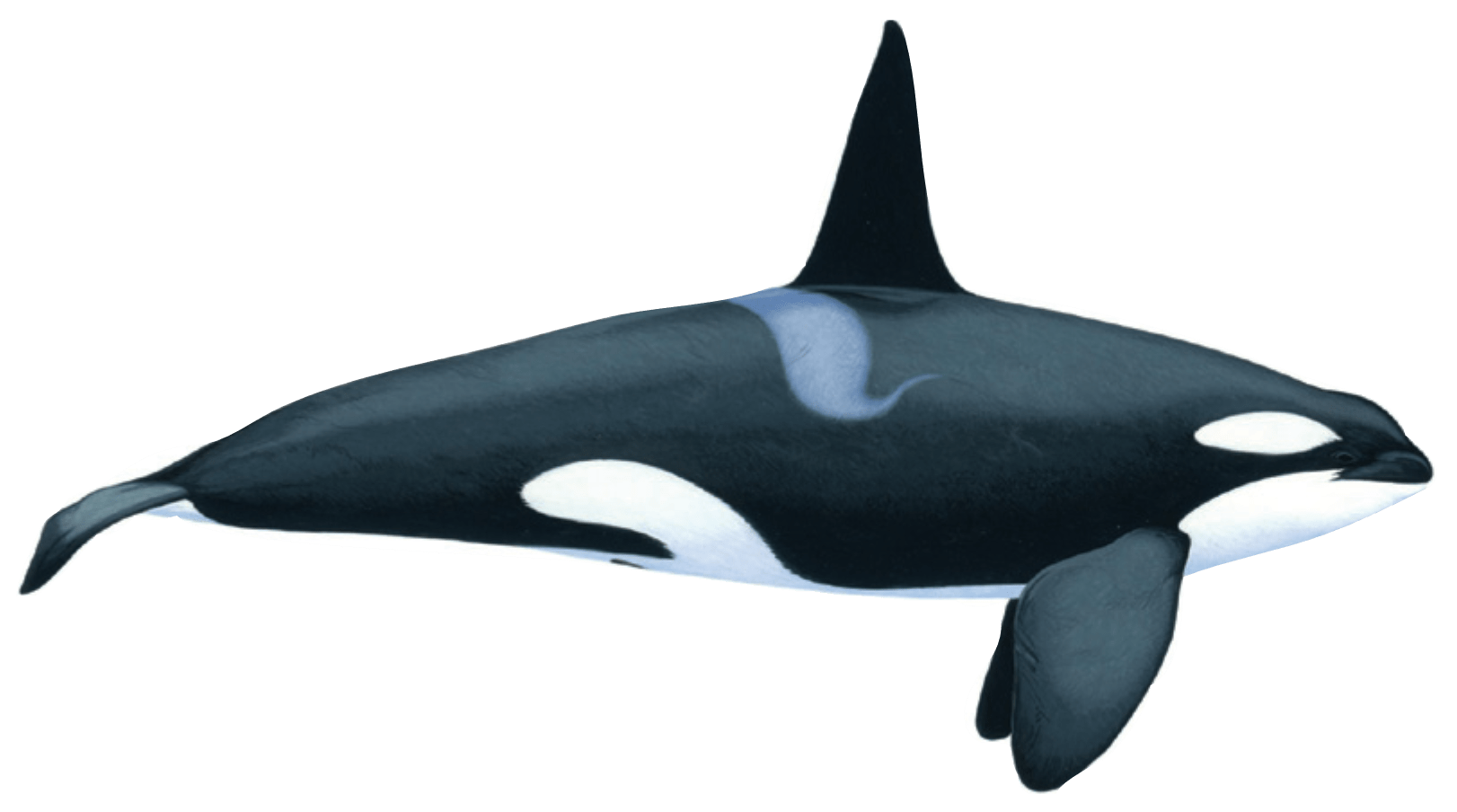
Orca or killer whale (Orcinus orca)
A coastal or pelagic species measuring up to 9.8 metres in length, white ventrally with characteristic white markings on the sides, throat, chin and eye, on a black background, tall straight (in males) or curved (in females and juveniles) dorsal fin and no ‘beak’. This species is widely distributed on the Atlantic seaboard, being mainly seen off northern Scotland, and occasionally off the Atlantic coasts of Britain and Ireland in the summer months. Orca have a gestation period of 16 to 17 months, calves are born at any time of the year, measuring 2.0 to 2.5 metres, and are around 4 metres in length when weaned. The species lives in stable groups of 3 to 50, and feeds on squid, fish and marine mammals.
Northern bottlenose whale (Hyperodon ampullatus)
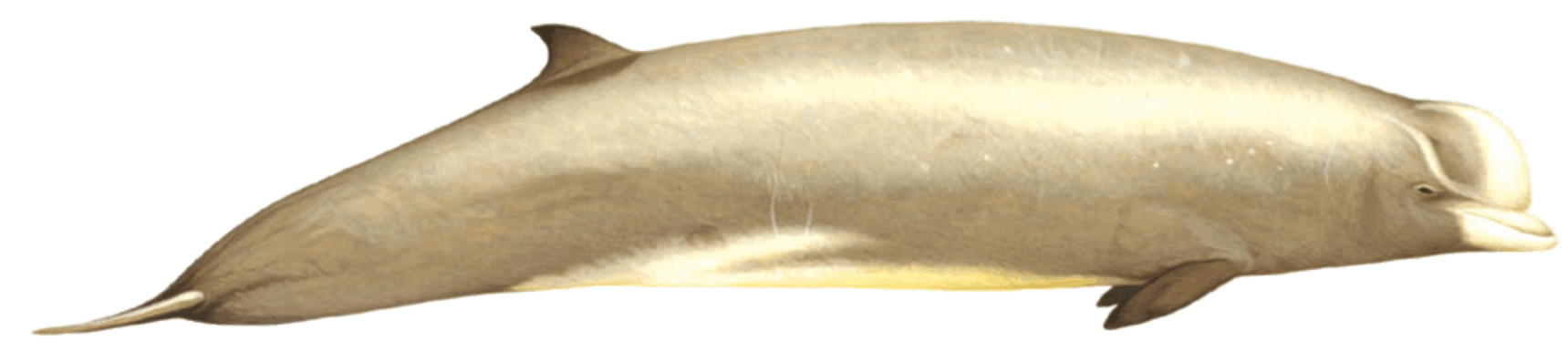
A pelagic species measuring up to 9.8 metres in length, black dorsally, paler ventrally, with a short ‘beak’ and bulbous head. This species is found in the north Atlantic and is rarely seen in British and Irish coastal waters in the summer months. Northern bottlenose whales have a gestation period of approximately 12 months. Calves are born between April and June, measuring 3.5 metres, and are dependent for over 12 months. The species is found in groups of 3 to 10, and feeds primarily on squid, but will also take other invertebrates, herring and deep sea fish.
Sperm whale (Physeter macrocephalus)
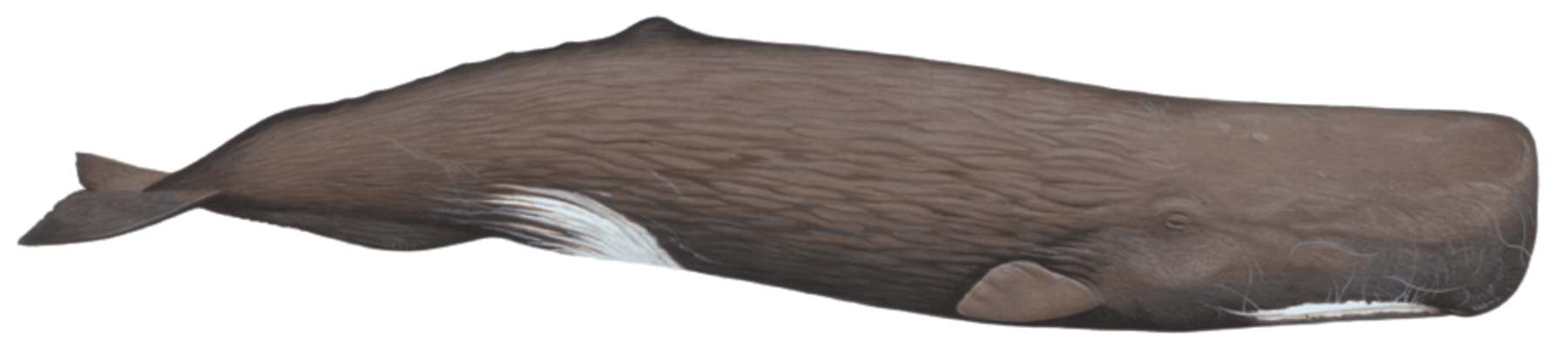
A pelagic species, measuring up to 20.5 metres in length, dark brown/grey in colour, with an elongated, rectangular head, a short lower jaw and no dorsal fin. This species is found occasionally in the north Atlantic and is rarely seen in British coastal waters in late summer and autumn. Sperm whales have a gestation period of 14.5 to 15 months, calves are born in summer and autumn, measuring 4.0 metres, and are dependent for up to 3.5 years. Females and calves are found in groups of 10 to 20 animals, but rarely venture above 45o North. Younger males are found in variable sized bachelor groups, older males are generally solitary. The diet is nearly exclusively squid (and octopus), although in some areas fish are also taken.
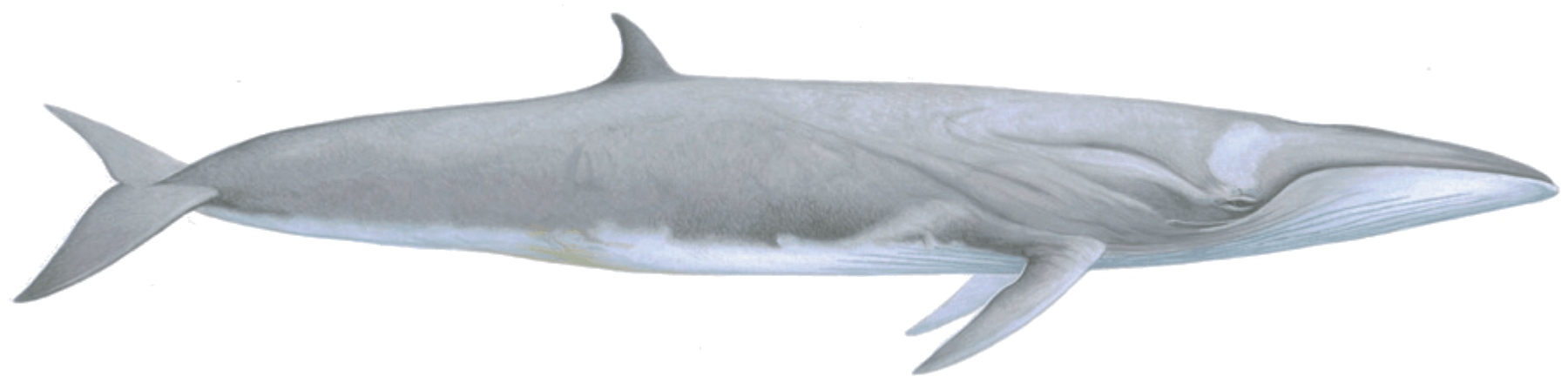
Minke whale (Balaenoptera acutorostrata)
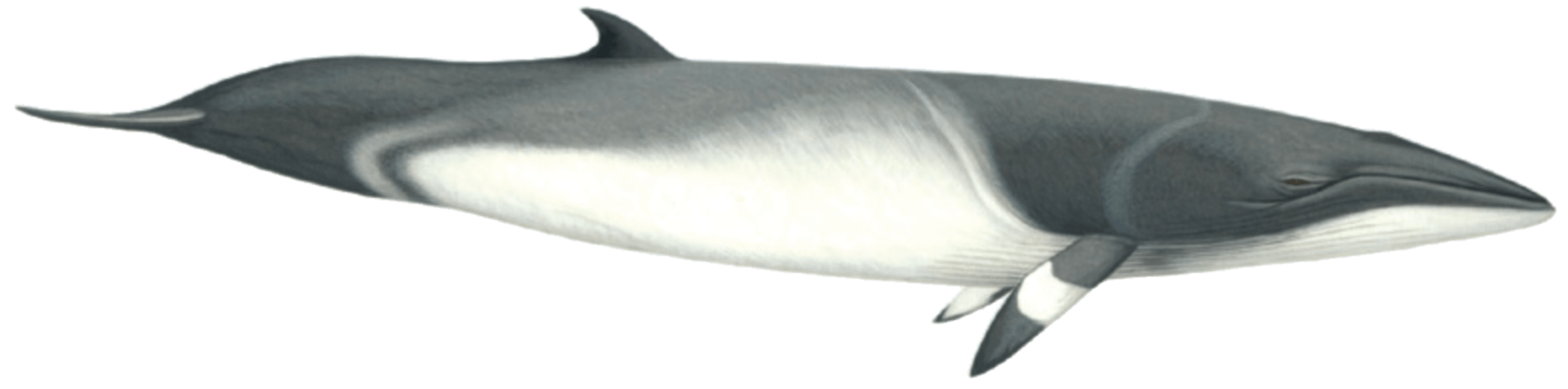
A pelagic species of baleen whale measuring up to 8.5 metres in length, dark grey dorsally, pale grey/white ventrally, with a white band on the dorsal surface of the pectoral flippers. The dorsal fin is set well back, two thirds of the way along the back. This species is found in the north Atlantic and northern North Sea and is seen in British coastal waters mainly in the summer months. Minke whales have a gestation period of 10 months. Calves are born in winter, measuring 2.6 metres and are dependent for approximately 4 months. The species is found alone or in small groups, and they feed on krill and a variety of shoaling fish.
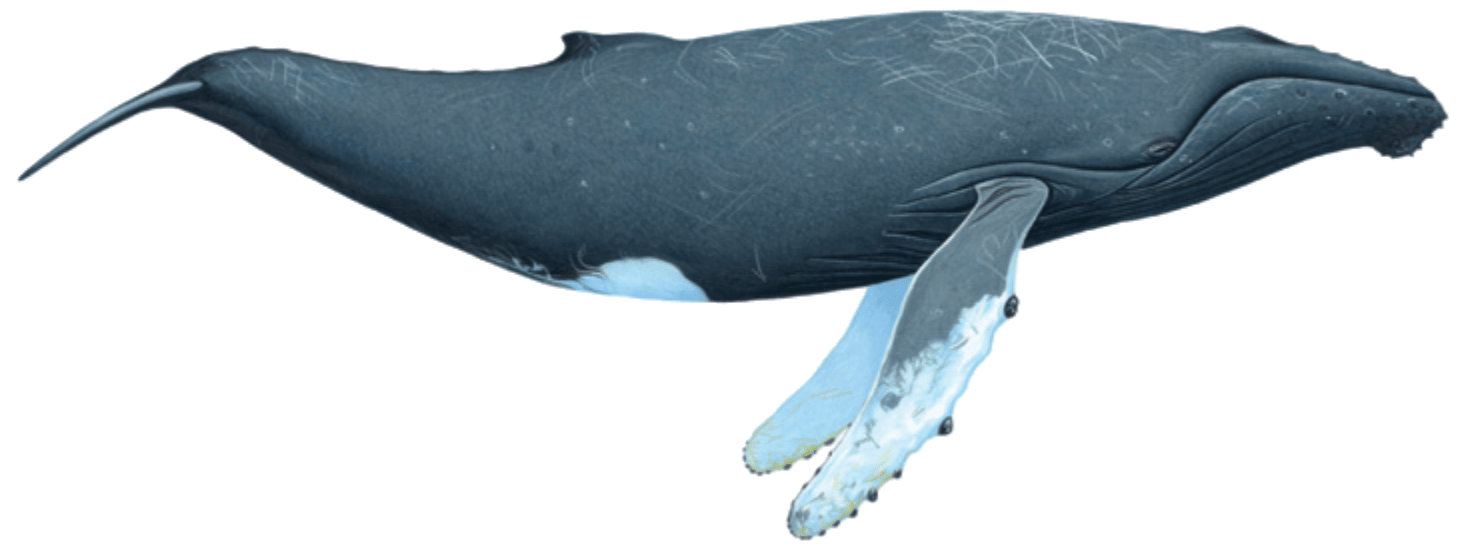
Humpback whale (Megaptera novaeangliae)
A pelagic species of baleen whale, measuring up to 15 metres in length. Black or dark grey dorsally, sometimes paler ventrally, with long, predominantly white pectoral flippers. The head is slender and covered in fleshy tubercles (lumps). The low dorsal fin is set well back on body. This species is found in the North Atlantic and is rarely seen on the Atlantic coasts in the spring and summer. Calves are born at just over 4 metres in length in the winter, after an approximately 11 month gestation period. The species is found in small groups and feeds on krill and a variety of shoaling fish.